


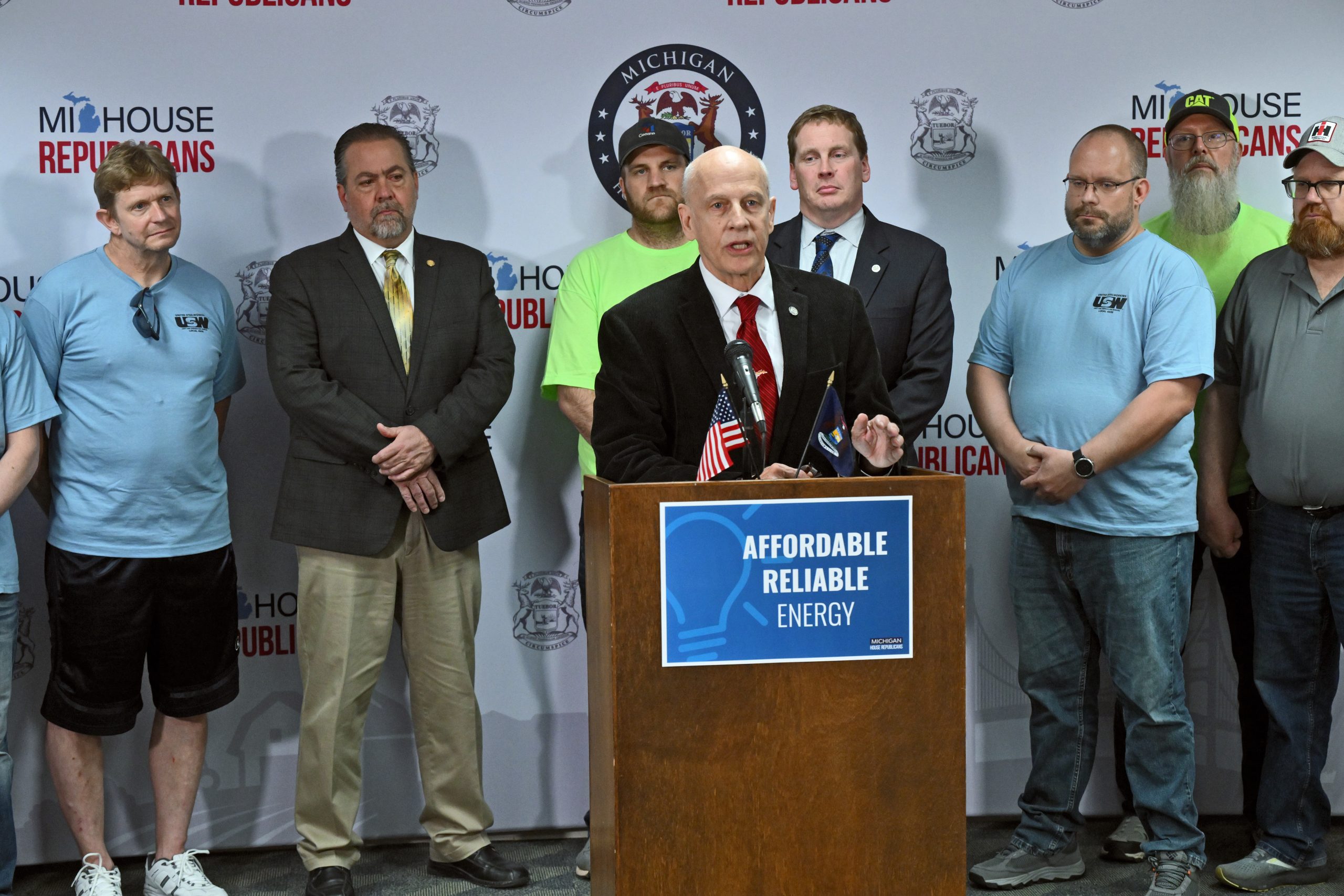
State Rep. Karl Bohnak today joined U.P. health officials in raising concerns about a proposal from the Michigan Department of Health and Human Services (MDHHS) that would force sparsely populated counties in Northern Michigan and the Upper Peninsula to compete directly with Michigan’s most populous metro counties – including Wayne and Oakland – for federal rural healthcare dollars.
“When our state health officials push bad ideas like this, they should have to come to the U.P. and explain how Detroit can possibly be considered rural,” said Bohnak, R-Deerton. “They should look a cancer patient in the eye who drives dozens of hours each month for lifesaving care — or a pregnant mother who lives with the constant fear of whether she’ll reach a hospital in time during an emergency. These are the people rural healthcare dollars are meant to help.”
Matt Maskart, chief executive officer of Pathways Community Mental Health in Marquette, and Tonya Darner, market chief executive officer of U.P. Health System, testified before the House budget committee on the need to ensure federal rural healthcare dollars reach truly rural communities.
Maskart explained that residents in downstate communities are often within an hour of comprehensive, world-class healthcare. In contrast, U.P. residents seeking the same level of care may face an eight-hour drive, unreliable transportation, limited time off work, and the added expense of overnight lodging.
“That availability might as well be on the moon,” Maskart said. “My concern is that the counties currently designated as partial rural or fully rural that border urban areas may capture a disproportionate share of grant funding leaving truly remote communities without the resources needed to establish or strengthen care closer to home.”
Created under the One Big Beautiful Bill Act of 2025, the Rural Health Transformation (RHT) program provides $50 billion over five years to improve rural healthcare. Acting as the RHT passthrough, MDHHS classifies entire counties as “rural” or “partially rural,” enabling entities across those counties to apply; as a result, all of Wayne County, with 1.8 million residents, qualifies for funding despite the department identifying only about 100 rural residents.
###


© 2009 - 2026 Michigan House Republicans. All Rights Reserved.
This site is protected by reCAPTCHA and the Google Privacy Policy and Terms of Service apply.